Durgaprasad B R

Durgaprasad B R

Copilots Don’t Create Delivery

Copilots are the visible part of AI adoption—and the easiest to roll out. But enterprises don’t fail because engineers can’t write code. They fail because the delivery chain can’t turn change into verified, releasable outcomes consistently: reviews, test execution, security scans, approvals, packaging, and run readiness. If those are slow or inconsistent, AI simply increases the pile-up. This blog reframes “AI tooling” as an end-to-end toolchain question: where work enters, how it gets verified, how evidence is captured, and how releases are decided. The goal isn’t maximum automation. It’s a stable operating flow where evidence is created by default and leaders can make calm decisions. Works for software deployments and also for systems contexts where release events are integration drops or prototype readiness.

“FLOW” as an Operating Principle

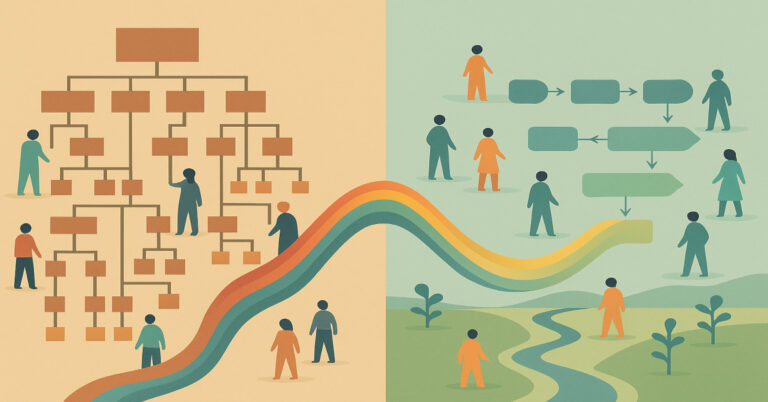
When we first introduced “flow” into transformation conversations, we assumed everyone would get it. Who doesn’t want things to move smoothly from idea to impact? But, in most enterprises, different functions speak different dialects of value: Flow gives us a…

Why “FLOW” is Our Favorite Word

At Flow Cracker, “FLOW” is more than just our favorite word—it’s our guiding principle. But why do we emphasize flow over traditional management metrics like productivity scores, utilization rates, or efficiency KPIs, or popular Agile metrics like velocity, story points,…

From Scarcity to Generativity

When leaders move from controlling resources to creating possibilities, transformation accelerates. Yet most transformation efforts stall because leaders are busy managing limitations—scarcity of time, talent, or budget—rather than unlocking energy and emergence. In the thick of delivery pressure and competing…