(CT-M106)
(CT-M106)
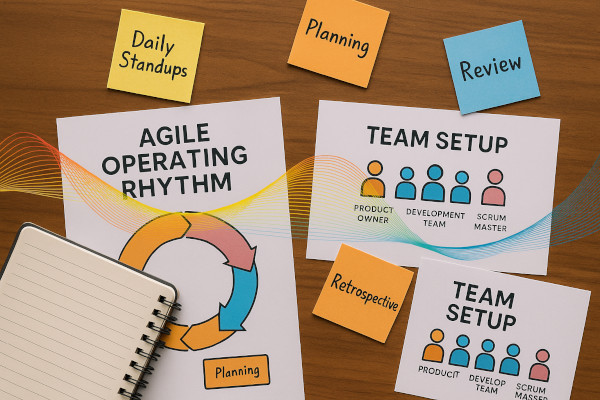
This two-day workshop equips Agile teams with the mindset, structure, and rhythm needed for sustainable collaboration and value delivery. It helps newly formed or transitioning teams establish their operating cadence, align on roles and expectations, and launch with confidence. The training provides a structured approach to designing ceremonies, communication practices, and visual workflows while grounding everything in shared purpose, working agreements, and team health metrics.
🎯 Learning Objective
By the end of this training, participants will be able to:
- Design a sustainable Agile cadence tailored to their work context
- Set up and facilitate Agile ceremonies that build rhythm and trust
- Create a shared team charter and norms for collaboration
- Clarify team roles, working agreements, and handoff protocols
- Launch with readiness using kickoff templates and alignment tools
- Use visual tools (physical or digital) to map and manage team flow
- Track and improve team health using confidence votes and feedback loops
- Create routines for cross-functional sync and continuous improvement
📌 Who Should Attend
Level: Intermediate
Team Format: Best for intact teams or cross-functional squads preparing to work together
🛠️ Format & Duration
🧭 Customization Options
This training can be tailored for Scrum, Kanban, or hybrid teams. We can integrate your tooling ecosystem (Jira, Miro, Azure DevOps) and current working agreements to make the workshop highly contextual.
🔗 Related Trainings
- CT-F101: Scrum Fundamentals for Delivery Teams
- CT-M102: User Stories and Backlog Management
- CT-M104: Agile Metrics and Reporting Essentials